
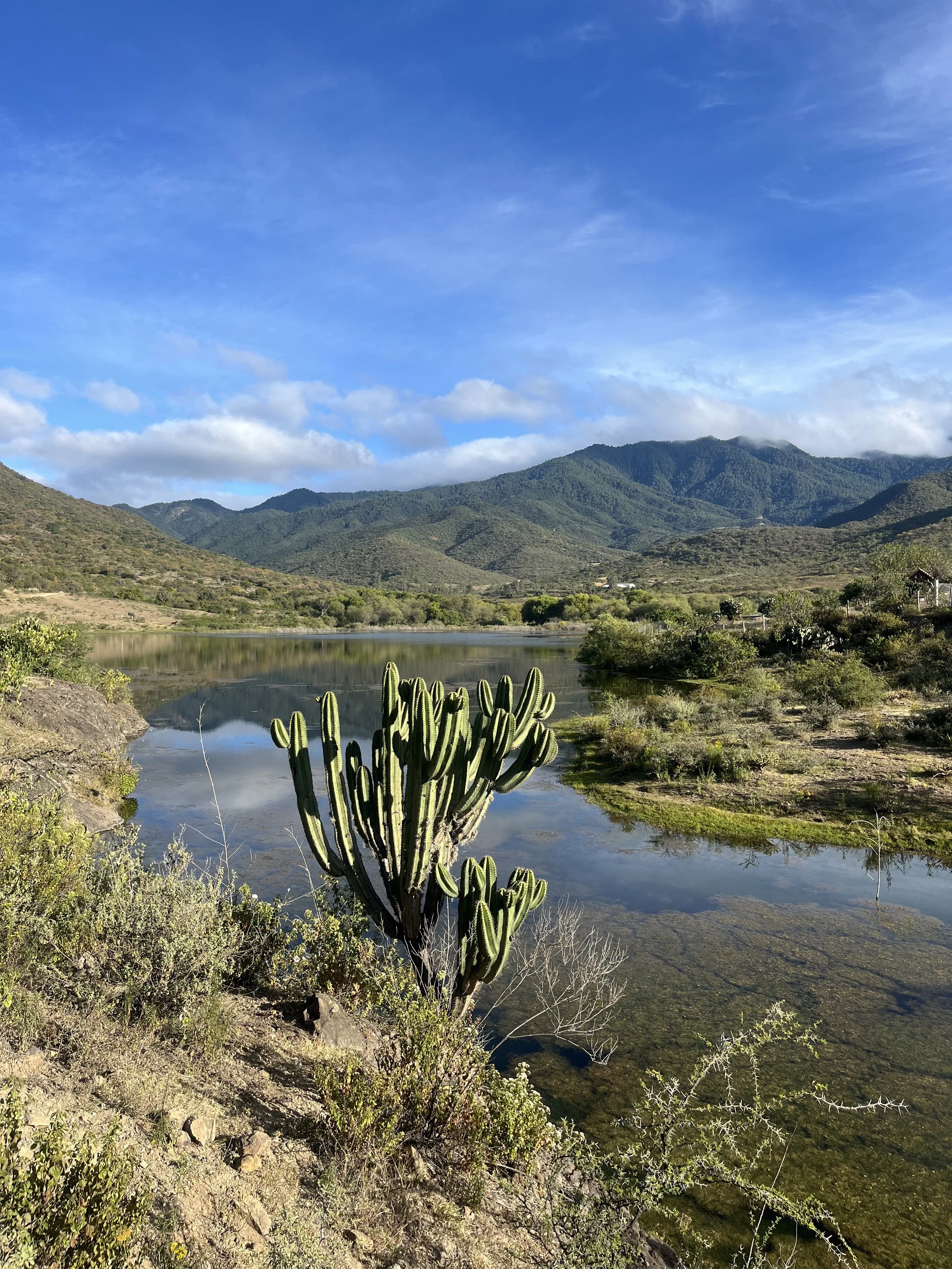
Blueprints series—Textile journeys into the wild
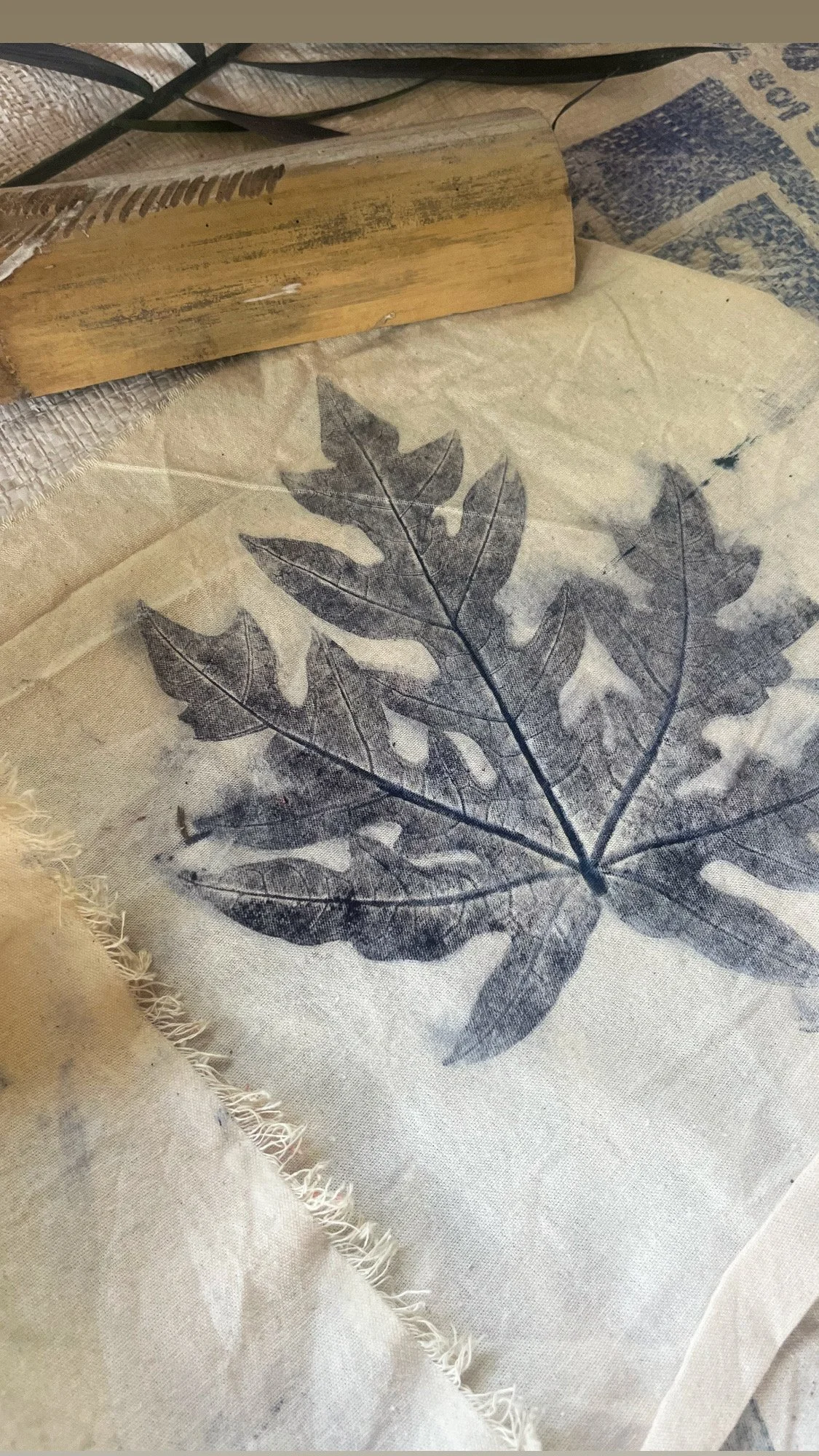
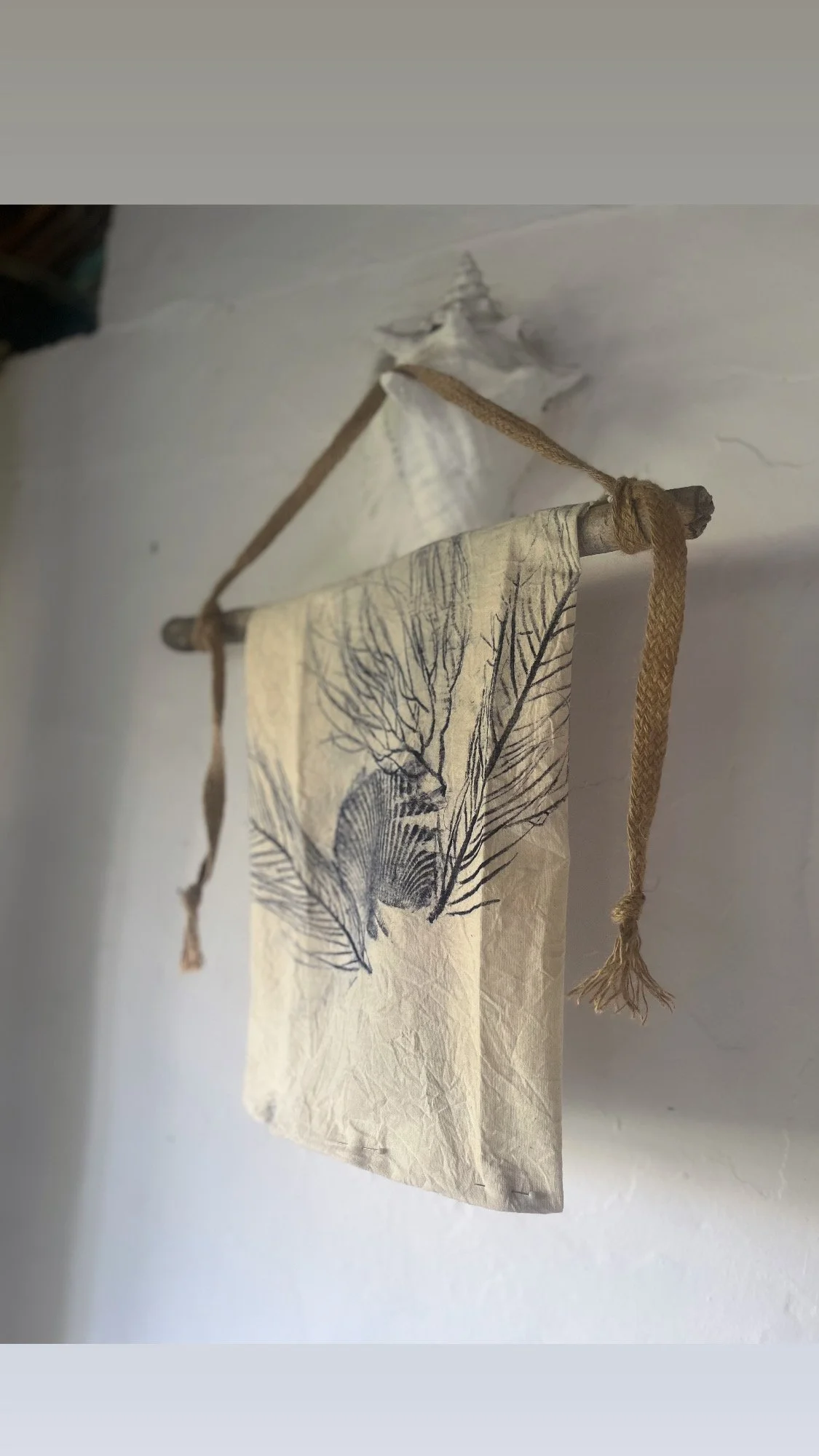
Each location becomes a living studio—where pattern, palette, and symbolism are drawn directly from the land. Through Japanese-style hand-stamping and minimal design, I translate the textures of fauna, flora, elements of nature, the seen and unseen into tactile prints.
More than design, these works are field records—silent collaborations with nature that speak messages. Every textile is a blueprint: not of architecture, but of place, presence, and the memory of wildness.
Case Study: “El Cuyo — Blueprint of Freedom”
A Textile Exploration of Place, Pattern, and Presence
In November 2024, I embarked on the first in a creative series called “Blueprints”—pilgrimages to Earth’s untouched biospheres to co-create with nature. Each journey becomes a dialogue with the land, sea, and sky, where the goal is not just to design, but to listen. El Cuyo, a quiet fishing village in the Yucatán, became the first of these conversations.
Over three weeks, I lived between sunrise and starlight, immersed in the rhythms of this remote place. I walked the beach at dawn, collected coral fragments, shells, and wind-carved driftwood—objects not for display, but for printing, each carrying the signature of its environment. I sought not just to gather, but to reflect: what is this place asking to be seen?
A Practice of Listening through Design
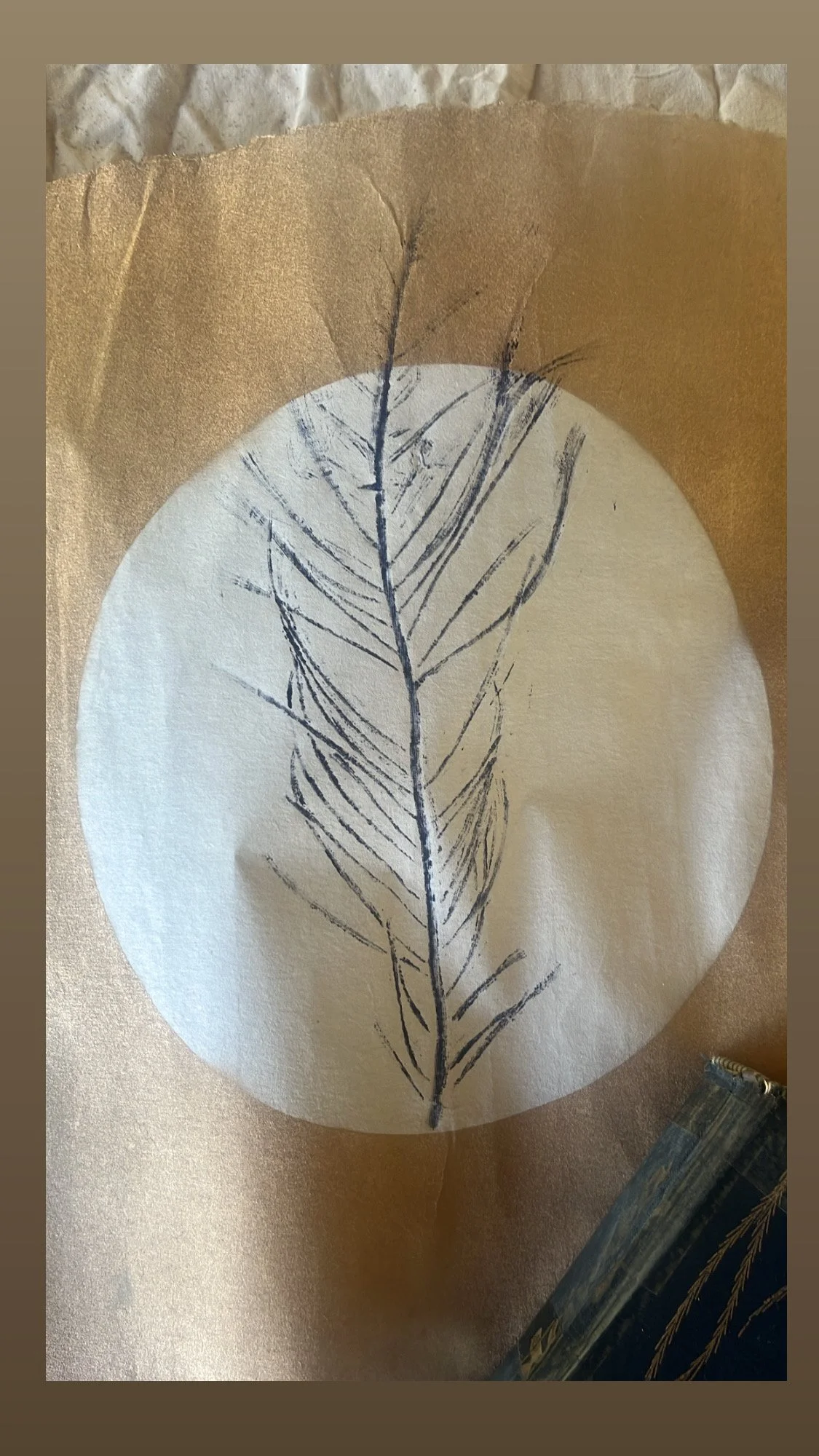
I work with Japanese-style hand stamping—a method that values restraint, repetition, and natural imperfection. In El Cuyo, this technique offered the perfect language for translating the textures I encountered: the ridged structure of coral, the swirling wind lines in sand, the delicate wings of seabirds in flight.
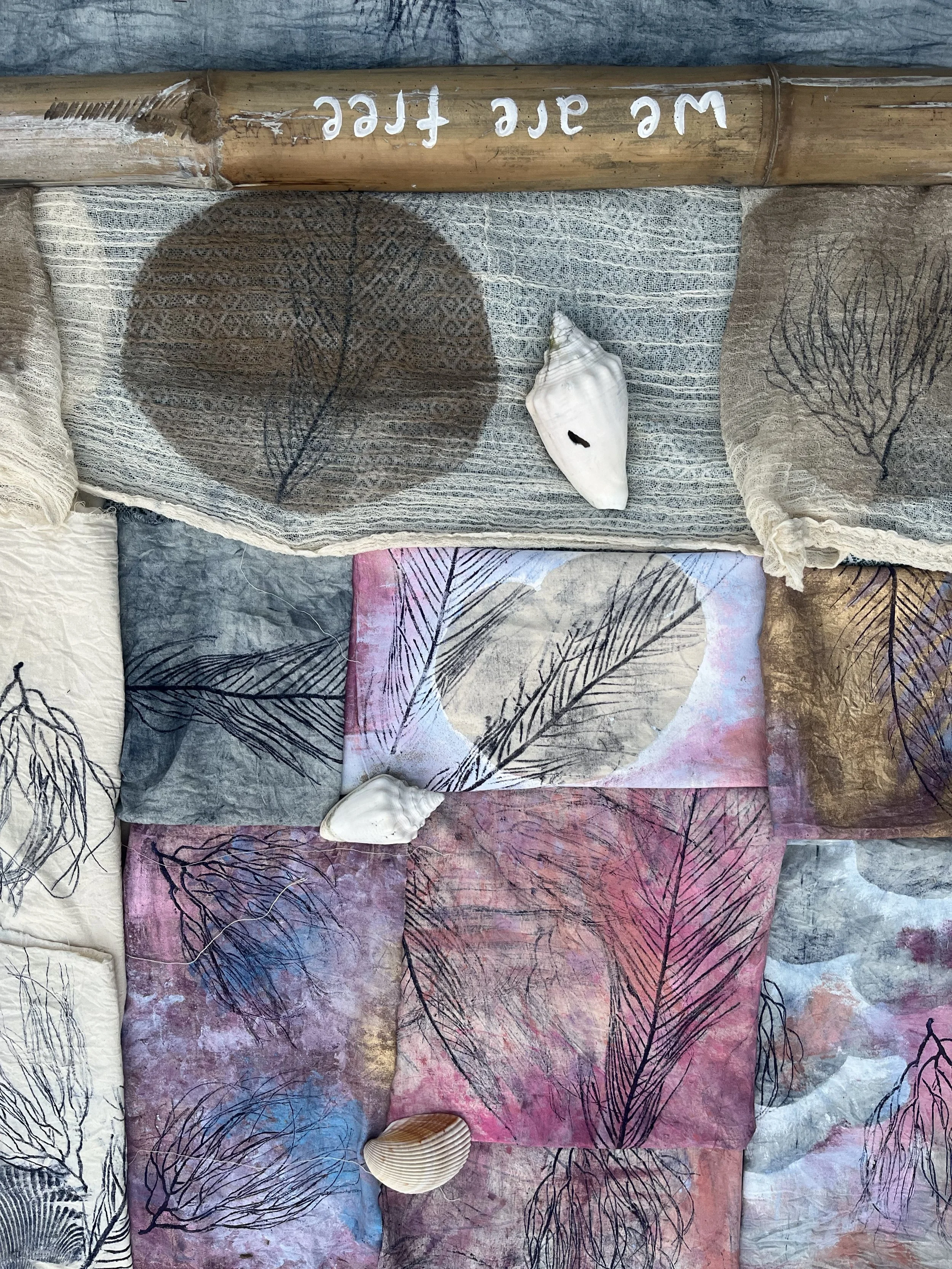
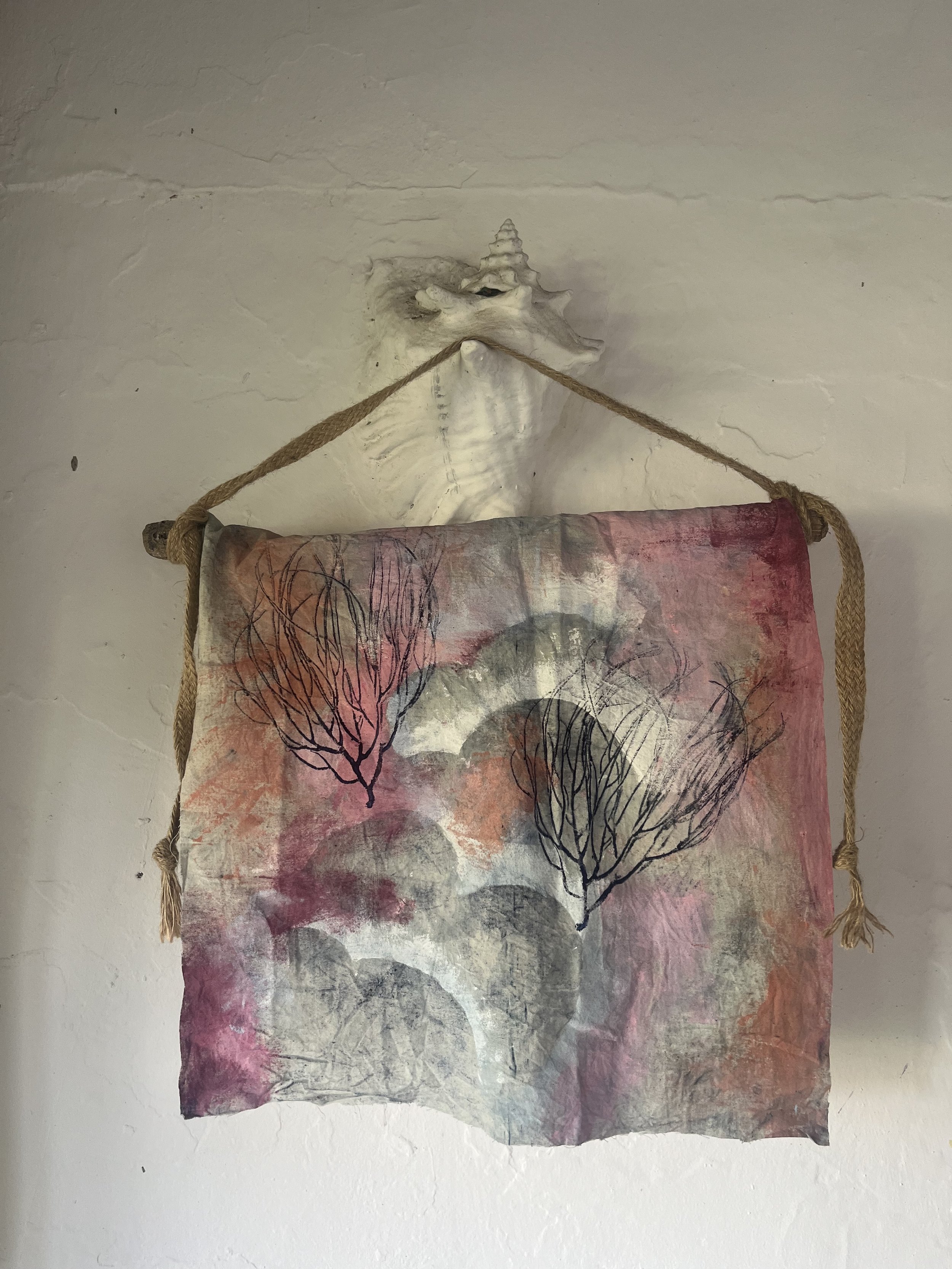
Each design was born from a moment of observation. The coral—my central motif—felt like an oceanic bouquet: strong spine, fine extensions, balanced between beauty and defense. Its pattern spoke of resilience and sovereignty. The colors came from the sky: soft marshmallow pinks, fiery oranges, and luminous golds, reflected from the nightly sunsets that turned the clouds into suspended dreamscapes.
Ecology, Community, and Respect
El Cuyo is alive in subtle ways. It’s a place of deep movement—winds that speak, waves that roar, birds that circle silently above. And yet, it holds a stillness that penetrates. The people mirror this pace. They speak with open hearts and serve you fish caught just hours before. One fisherman brought me to the reserve to see the flamingoes. “They won’t stay long,” he said, “We must not disturb them.” That gentle protection of nature felt more like a way of being than a rule.
This ethos informed my process. I was not there to extract. I was there to witness and reflect. Every element—pattern, symbol, texture—was filtered through that respect. The idea was never to “take” from El Cuyo, but to allow its voice to surface through textile.
The Message of the Work: We Are Free
The final message of this project was simple and unshakable: We are free.
Not as a slogan, but as a truth whispered from the land itself. Nature is not bound by ownership. The sky cannot be contained. The sea answers to no one. And in witnessing this, something opened in me. The textiles became an offering—not just a design collection, but a record of freedom remembered.
Conclusion: Textile as Living Archive
Each place on Earth holds a unique energy, rhythm, and pattern. In this series, I aim to create textiles that don’t just echo those places—but are those places, in symbolic form.
El Cuyo was the first blueprint. A weaving of sky-pink light, coral strength, and wind-borne silence. A reminder that when we allow ourselves to move with nature—not above it—we remember that freedom is not something to attain. It is something to return to.
We Are Free
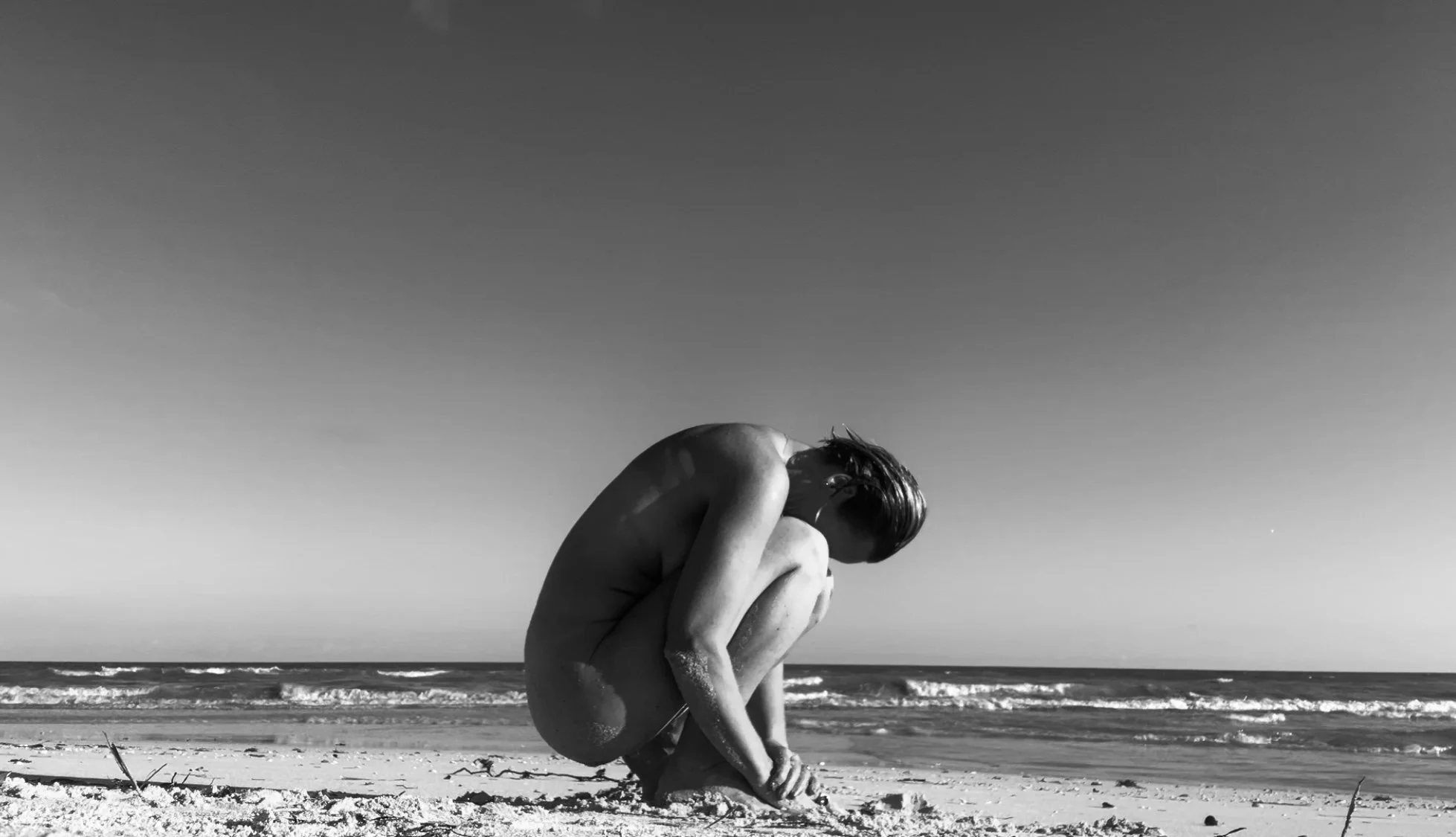
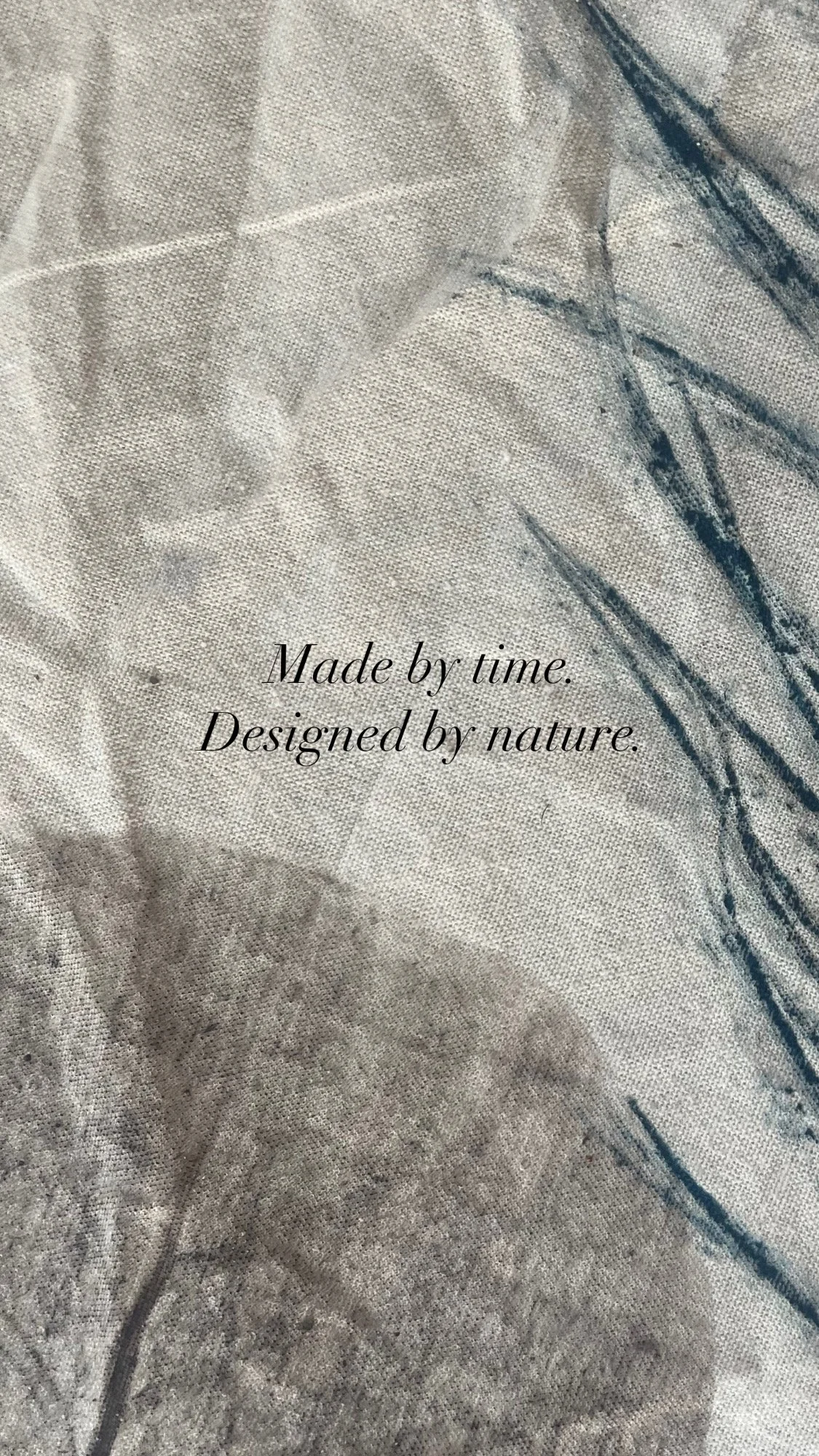
I walked with the wind, collected coral, listened to the ocean, and hand-stamped its memory into fabric.
Each print is a reflection of this place:
coral as structure, pink skies as palette, freedom as the message.
Nature is not owned.
It cannot be claimed.
And in that, we are free.